
Massachusetts regulators are reviewing a proposal that would strip residency requirements from the state's medical cannabis program, letting patients from other states register and buy at Massachusetts dispensaries. The Cannabis Control Commission floated the rule change at an October 22 meeting, and the timing is not incidental - the state's medical market has been losing ground for years, and this looks like an attempt to shore it up before things get worse.
What the Proposed Rule Actually Changes
Under the draft regulations, non-resident patients 18 and older could register for the Massachusetts Medical Cannabis Program if a healthcare professional licensed in the state certifies an eligible disabling condition. Minors would face a higher bar: a life-limiting illness, certified by two healthcare professionals rather than one. That distinction matters operationally - dispensaries and the physicians who certify patients will need updated intake protocols to handle out-of-state documentation, verify in-state provider sign-off, and keep compliance logs clean for CCC audits. Commissioner Xiomara DeLobato framed the move as a practical fix for patients who travel to Massachusetts for appointments or family visits and need continuity of treatment while there. Fair enough - but easing access on paper still requires dispensaries to build the back-end verification systems to make it work in practice.
A Medical Market Looking for a Lifeline
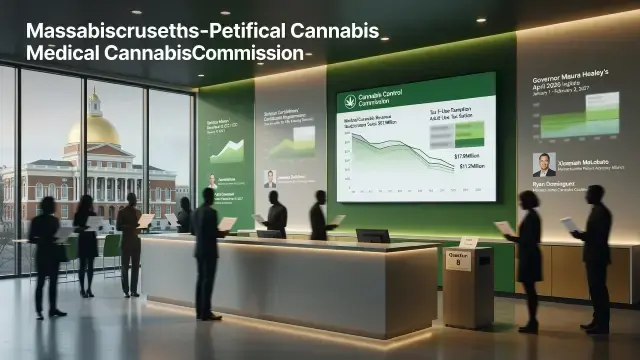
The economics here are the real story. CCC figures cited by the State House News Service show medical cannabis sales falling from $17.9 million in September 2023 to $11.2 million in the same month under the newer figures referenced - a drop of roughly 37%. That's a steep decline for a channel that carries real tax advantages: medical purchases are exempt from the state's cannabis-specific taxes, while adult-use products face a 6.25% sales tax, a 10.75% excise tax, and up to a 3% local option tax. For patients, that tax gap is significant. For dispensaries, a shrinking medical customer base means less budroom turnover in a category that was supposed to be the more stable, recurring-revenue side of the business. Jeremiah MacKinnon of the Massachusetts Patient Advocacy Alliance called the proposal "a step in the right direction toward modernizing" the program - modernization here being a polite way of saying the current system is losing patients to adult-use stores or to neighboring states that already allow reciprocity, including New Hampshire, Rhode Island, Connecticut, New York, and Maine.
The Adult-Use Question Hanging Over Everything
This regulatory move lands alongside a separate, higher-stakes fight. Voters decide Question 8 in November, a ballot initiative that would repeal the state's recreational cannabis market outright. Ryan Dominguez of the Massachusetts Cannabis Coalition has pointed out that expanded medical access could become far more consequential if adult-use sales disappear - suddenly the medical channel isn't a side business, it's the only legal retail channel left standing. It's worth being precise, though: this CCC proposal is procedurally separate from the referendum and would not automatically grant reciprocity for medical cards issued by other states. A broader reciprocity provision passed the Senate previously but got stripped out during House negotiations before Governor Maura Healey's cannabis legislation in April 2026. That history suggests this current proposal may face its own resistance before it's final.
What Operators Should Watch Next
The CCC has scheduled an initial vote for December 10, 2026, followed by public comment from January 1 through February 2, 2027. Regulators can still amend the rule before any final vote, so dispensary operators, point-of-sale vendors, and compliance teams have a real window to weigh in rather than react after the fact.
- Age and condition verification: non-resident patients 18+ need in-state provider certification; minors face a stricter two-provider, life-limiting-illness standard.
- Tax exposure: medical sales remain exempt from state cannabis taxes, unlike adult-use products subject to sales, excise, and local taxes.
- No automatic reciprocity: out-of-state medical cards won't be recognized outright, meaning Massachusetts-specific registration stays required.
- Regulatory calendar: initial CCC vote December 10, 2026; public comment window January 1-February 2, 2027.
For an industry watching both a shrinking medical segment and a ballot measure that could reshape the adult-use market entirely, this proposal is less a single fix than one piece of a larger balancing act between patient access, tax policy, and dispensary viability.