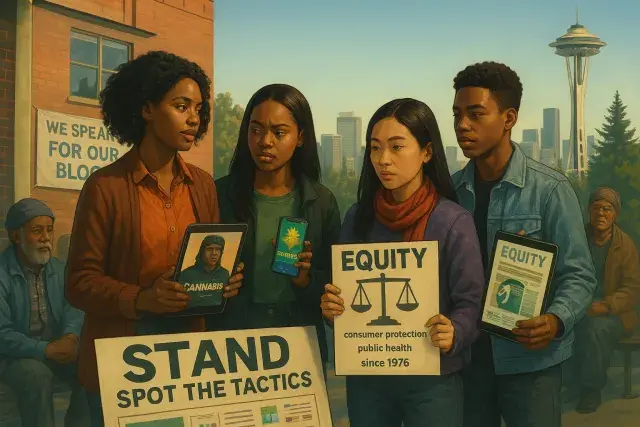
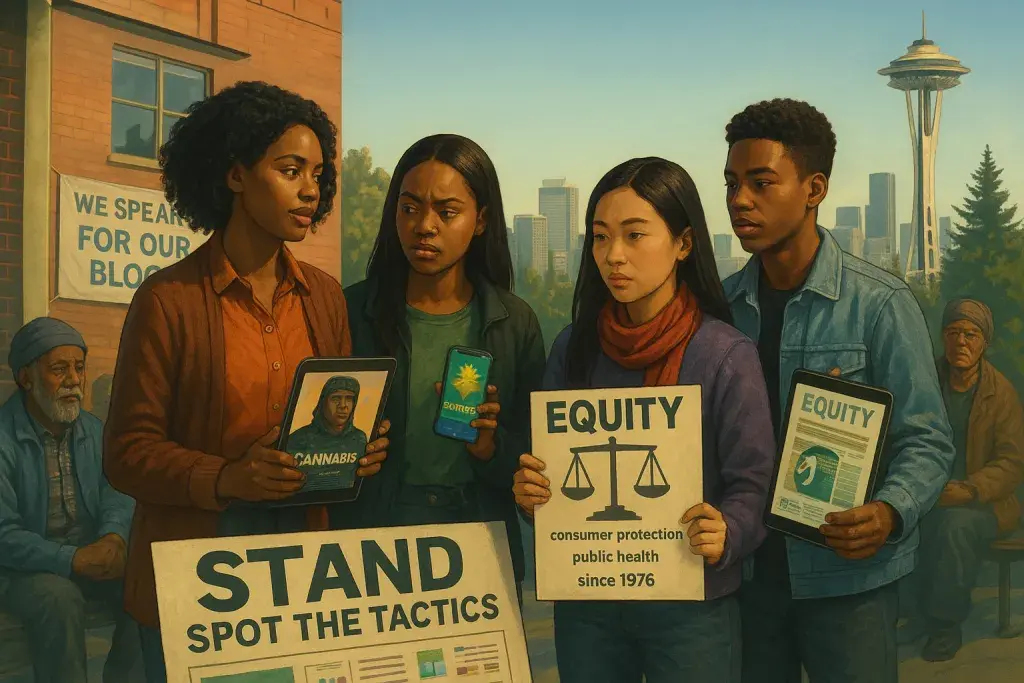
A Seattle-based nonprofit is taking a direct run at one of the more consequential - and underexamined - problems in regulated cannabis markets: the targeting of young people and communities of color through social media and digital advertising. The Center for MultiCultural Health, founded in 1976, runs a youth-led initiative called STAND that equips teenagers across Washington with the critical thinking tools to recognize industry marketing strategies, understand their health implications, and become advocates within their own communities. The program sits at the intersection of consumer protection, public health education, and equity - a combination that cannabis operators, regulators, and compliance professionals increasingly cannot afford to ignore.
For cannabis retailers and brands operating in adult-use markets like Washington, advertising compliance is already a minefield. State-level regulations typically prohibit marketing that targets minors, restrict imagery and messaging near schools, and require age-gating on digital platforms. Yet enforcement of digital advertising rules remains uneven across jurisdictions, and the informal channels - social media influencers, sponsored content, algorithmic amplification - remain genuinely difficult to police. Operators who rely on their platform to manage retail operations understand that compliance extends beyond the POS terminal and the inventory log; what a brand publishes online carries regulatory and reputational weight that can reach far beyond the dispensary floor. STAND's work makes plain that the gap between what regulations require and what actually reaches young consumers is still wide.
Kerry Holifield-Alcantara, program director at CMCH, describes the organization's approach as intersectional prevention - a methodology that goes well beyond telling teenagers to say no. The program examines the documented history of targeted marketing in communities of color, including how menthol cigarette advertising was concentrated in Black communities for decades and how cannabis advertising can normalize substance use among young people who lack the context to evaluate those messages critically. "Our power as a community comes from who we are as a culture and what we can do when we lean into listening to our elders and empowering our youth," Holifield-Alcantara said, "aside from the way that we're portrayed by other communities and on social media."
What the Industry Needs to Reckon With
The marketing question in cannabis is genuinely complicated. Legal operators face strict advertising restrictions that illicit-market sellers simply ignore. Compliant brands invest in age-verification systems, cautious ad copy, and careful channel selection. And yet the broader digital environment - where cannabis content circulates freely on platforms with inconsistent enforcement policies - creates an ambient exposure that regulatory frameworks were not designed to address. STAND's peer-led presentations have reached more than 700,000 people across Washington. That number reflects both the scale of the outreach problem and the appetite young communities have for honest, culturally grounded information.
Ana-Liyah Dumas, who first joined STAND as a teenager and now serves as the program's youth coordinator, put the consumer-awareness gap plainly. "Often it can be normalized, but I never fully knew the repercussions and the ways that it can affect your physical health as well as your mental health," she said. "And the targeted advertising that we experienced in our community - these are things that were around, but we never knew the ins and outs of it." That is precisely the kind of information asymmetry that regulators in adult-use states are supposed to prevent through responsible advertising standards - and that licensed operators are supposed to uphold through compliant marketing practices.
Equity, Trust, and the Limits of Compliance-Only Thinking
CMCH employs staff who share the lived experiences and cultural backgrounds of the communities they serve. That is not incidental to the program's effectiveness - it is the mechanism. Culturally responsive outreach builds the kind of trust that a generic prevention campaign cannot. Holifield-Alcantara is also careful to note that STAND does not stigmatize young people who use substances. "We just want youth to make educated decisions and know that the elders in their community are looking out for them," she said. That framing matters in communities with a documented history of over-policing and medical mistrust - communities that cannabis legalization was, in part, intended to benefit through social equity provisions and license access.
For Divaa Nkanatta, an international student who joined the program after moving to the United States in 2024, STAND provided something more immediate than policy context: a sense of identity strong enough to resist peer pressure. "If I was not in STAND," she said, "then it would have made me make choices I would regret in the future in terms of trying to fit into school and finding my people." That is a human story. It is also a data point about how vulnerable young immigrants can be to the social normalization of substance use - and about the limits of what a license condition or a warning label can accomplish on its own.
The Broader Implication for Regulated Cannabis Markets
Dispensary operators, cannabis brands, and multistate operators all have a compliance interest in this conversation - and, to be direct, a business interest too. Regulated markets depend on public legitimacy. When youth advocates and community organizations document the gap between stated marketing rules and actual consumer exposure, they are producing exactly the kind of evidence that shapes future regulation. Washington's cannabis market has been operating under adult-use rules since 2014; other states are still drafting their advertising frameworks. Programs like STAND generate community-level pressure that tends to translate, eventually, into stricter enforcement standards, narrower advertising permissions, and more rigorous platform accountability requirements.
Holifield-Alcantara's tagline for the program - "we speak up for our block" - is straightforward community advocacy language. But read through a compliance lens, it describes something every licensed operator should take seriously: organized, youth-led, culturally grounded scrutiny of how cannabis brands reach young people. That scrutiny is not going away. The smarter response is not to treat it as a threat but to let it inform what responsible marketing in a regulated market actually looks like.