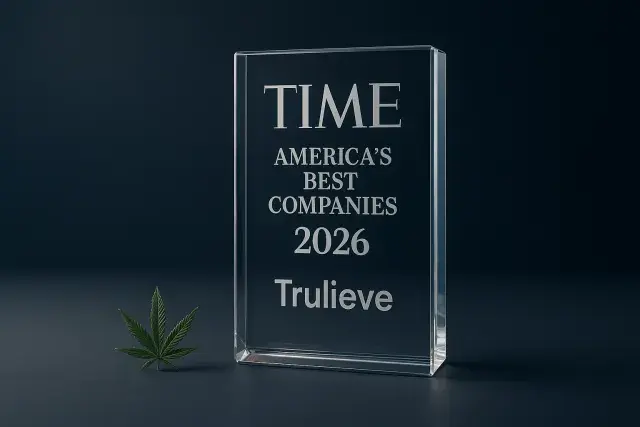

Trulieve has secured a spot on TIME's 2026 list of America's Best Companies, an annual ranking compiled with Statista that evaluates roughly 7,200 eligible U.S. businesses on employee satisfaction, financial strength, and sustainability transparency. The multistate operator landed at No. 921 - a modest slot on paper, but a notable one given that only two cannabis companies made the cut at all. For an industry still locked out of federal banking and burdened by Section 280E tax treatment, that kind of mainstream recognition carries weight beyond the ranking number itself.
What's striking here is the criteria. TIME and Statista aren't scoring dispensary foot traffic or wholesale margins; they're measuring workforce sentiment, balance-sheet resilience, and how openly a company reports its environmental and governance practices. Those are metrics cannabis operators rarely get credit for, mostly because the sector's reputation still trails its regulatory reality by a few years. Trulieve operates dispensary locations across eight states, including Arizona, and runs the kind of vertically integrated model - cultivation, processing, retail - that demands tight operational discipline at every stage, from seed-to-sale tracking to point-of-sale reconciliation. In markets where the company has expanded more recently, the back-end infrastructure matters just as much as the storefront; a retailer relying on a modern point-of-sale for Montana dispensaries system, for instance, needs the same compliance logging and inventory accuracy that a mature market like Florida or Arizona has had years to refine.
Why Financial Durability Is the Real Story
Cannabis companies don't get graded on a curve just because the industry is young. TIME's methodology weighs financial strength alongside workplace culture, which means Trulieve's inclusion signals something operators and investors actually care about: staying power in a market where undercapitalized competitors have folded, consolidated, or quietly shut down retail footprints. CEO Kim Rivera framed the recognition as a reflection of business durability rather than a marketing win, and that distinction matters. In a sector where 280E taxation eats into net margins that other retailers don't have to absorb, simply remaining solvent and expanding access across multiple state markets is its own kind of achievement.
What It Means for Operators and the Broader Market
For multistate operators watching from the sidelines, Trulieve's placement is a data point worth studying, not a headline to shrug off. It suggests that mainstream business analysts are starting to apply the same yardsticks to cannabis retailers that they apply to any other regulated consumer industry - workforce stability, transparent reporting, and financial fundamentals. That's a meaningful shift for a sector that spent its first decade fighting for basic banking access and compliant packaging standards state by state.
None of this changes the underlying compliance burden facing dispensary operators day to day. Age-verification protocols, lab-tested product batches, COA documentation, and state-specific packaging rules remain non-negotiable regardless of national accolades. But recognition like this does something practical: it gives landlords, payment processors, and potential investors a data point that isn't tied to a single state's regulatory mood swings. In an industry still building legitimacy one license at a time, that's not nothing.