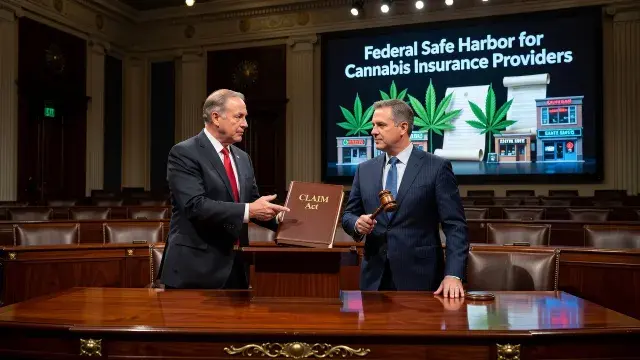
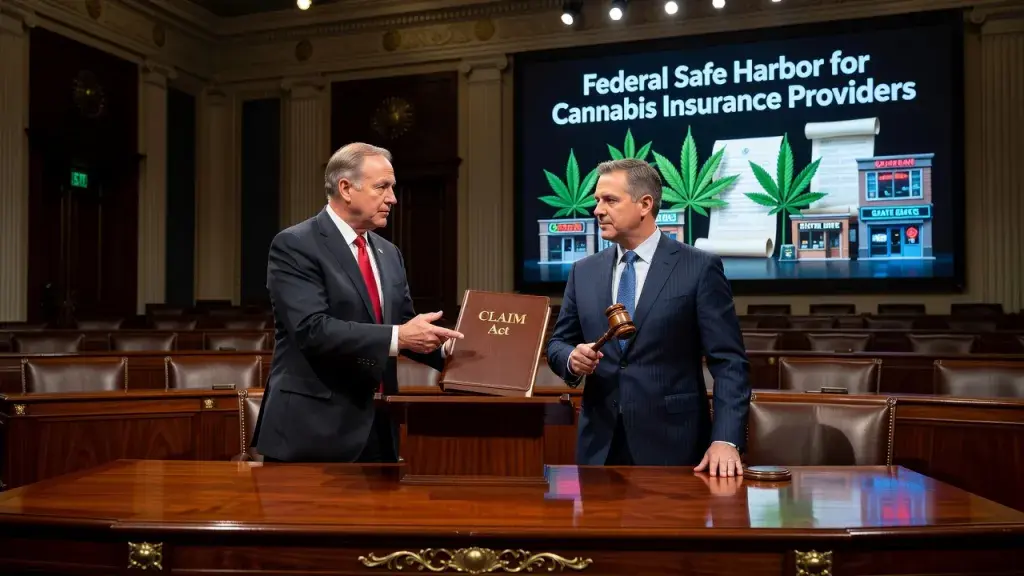
Two U.S. senators introduced legislation this week that would shield insurance companies from federal penalties for underwriting policies covering state-licensed marijuana businesses. Sens. Kevin Cramer (R-ND) and Ruben Gallego (D-AZ) filed the Clarifying Law Around Insurance of Marijuana (CLAIM) Act on Tuesday, marking the fourth consecutive Congress in which some version of the bill has been put forward. The measure targets a gap in the regulated cannabis market that has quietly complicated everything from property coverage to loan approvals for operators nationwide.
Here's the underlying problem: cannabis remains a Schedule I substance under federal law, which means insurers who write policies for dispensaries, cultivators, and processors are technically exposed to federal liability, even in states where the business is fully licensed and compliant. That legal ambiguity has made carriers skittish, and many licensed operators end up with thin coverage options, higher premiums, or none at all. Operators trying to run a tight compliance operation - proper seed-to-sale tracking, secure cash handling, accurate lab testing records - still can't always find a carrier willing to insure the storefront itself. It's a strange mismatch, and one that ripples into everyday retail operations, including the back-office systems dispensaries rely on, such as the cannabis retailer software nevada operators use to manage inventory, point-of-sale transactions, and compliance logs. Without adequate insurance, lenders often view these businesses as too risky, which compounds the financing problems cannabis companies already face under federal banking restrictions.
What the Bill Would Actually Change
The CLAIM Act would bar federal agencies from penalizing insurers, brokers, or agents simply for offering commercial products to state-legal marijuana-related businesses. It would also prohibit insurers from terminating or limiting policies for cannabis companies or ancillary businesses based solely on their industry. Employees of insurance firms would get explicit liability protection too, meaning underwriters and claims adjusters couldn't be held personally accountable for doing their jobs. That's a meaningful distinction for an industry where individual workers, not just corporate entities, have sometimes worried about exposure.
The bill also directs the Government Accountability Office to study barriers facing minority-owned and women-owned cannabis businesses, particularly around licensing and access to financial services. Social equity applicants already face steep hurdles getting licensed in many states; add in the difficulty of securing insurance or bank financing, and the playing field tilts further against smaller, less-capitalized entrants trying to compete with vertically integrated multi-state operators.
Insurance Access as a Safety and Business Continuity Issue
Supporters frame this as more than a paperwork fix. Dispensaries and cultivation facilities without adequate property and casualty coverage are more vulnerable to inventory shrinkage, fire damage, or theft going unaddressed financially. That has real consumer-safety implications, too - an underinsured operator facing a loss may cut corners on security or compliant packaging just to stay afloat. Title insurance gaps also complicate real estate transactions for operators trying to secure retail locations, since many property insurers still won't touch a building leased to a cannabis tenant.
A Broader Federal Reform Moment
The insurance bill lands alongside other cannabis banking and finance measures moving through Congress, including a related bill filed last month to protect banks working with cannabis companies. Meanwhile, the Trump administration is advancing a rescheduling process that could move marijuana from Schedule I to Schedule III under the Controlled Substances Act. Testimony in that DEA-supervised hearing wrapped up last week, with final briefs due August 17 before a judge issues a recommendation. None of these efforts guarantee quick resolution, but taken together, they suggest federal policy is inching, unevenly, toward treating cannabis more like a regulated commercial industry and less like an outlaw enterprise - a shift operators, insurers, and lenders have been waiting years to see codified.