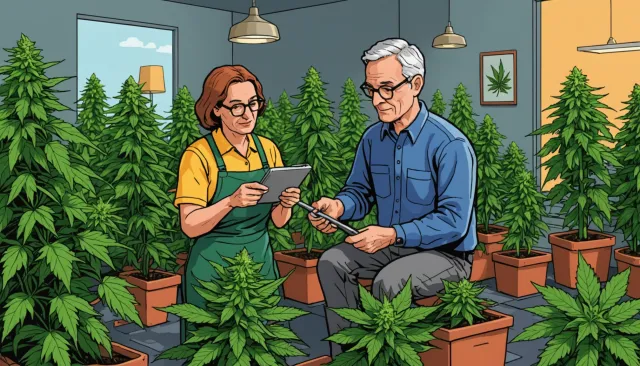
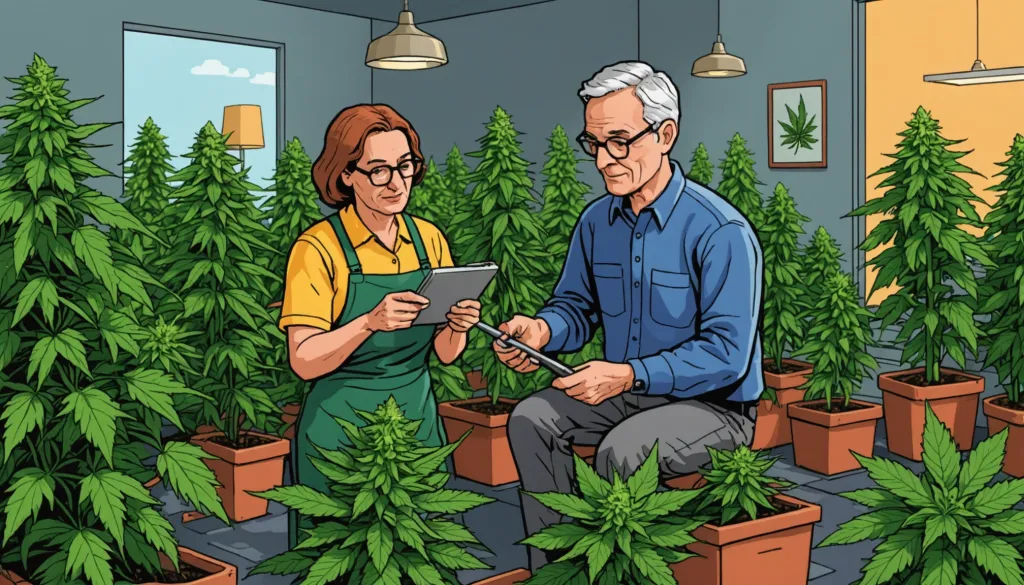
Michigan's cannabis market has spent years drowning in its own supply. Prices have collapsed, margins have thinned, and operators keep asking the same question: where are the new customers going to come from? A growing body of federal and academic research points to an answer that the industry has mostly overlooked - Baby Boomers, a demographic cannabis retailers have rarely treated as a core audience.
National purchasing data attributed to Headset shows Baby Boomers now account for roughly 12.6 percent of tracked U.S. cannabis spending, trailing Millennials, Generation X and Generation Z but still representing a meaningful and apparently growing slice of the market. Applied to Michigan's approximately $3.17 billion in 2025 cannabis sales, that share suggests a Baby Boomer market approaching $400 million a year in that state alone - an estimate, not an official figure, since Michigan's Cannabis Regulatory Agency does not break down sales by generation. For operators trying to model demand across product categories, age cohorts and regional markets, the underlying infrastructure question is just as important as the demographic one; multi-state operators increasingly rely on platforms like a cannabis seed to sale erp minnesota to track inventory, purchasing patterns and compliance data across expanding customer bases. cannabis seed to sale erp minnesota
Ohio adds another layer to the picture. The state's recreational market cleared $836 million in 2025, its first full year of adult-use sales, with another roughly $233 million moving through the medical channel. Apply that same 12.6 percent Boomer spending share and Ohio's recreational segment alone could represent around $105 million annually. Combine the two states and the back-of-envelope math points to a roughly half-billion-dollar Baby Boomer cannabis market across Michigan and Ohio - a number worth taking seriously even with the caveat that neither state publishes generational sales breakdowns.
Why the Numbers Matter for a Saturated Market
Michigan's oversupply problem is well documented: production has outpaced demand, wholesale flower prices have fallen below $60 an ounce in early 2026, and the state's new 24 percent wholesale tax, effective Jan. 1, has squeezed margins further. Much of the industry conversation has focused on trimming production or consolidating licenses. Fewer operators have asked whether the state has actually reached all its potential customers. University of Michigan polling suggests it hasn't - 27 percent of Michigan residents 50 and older reported using THC-containing cannabis in the past year, compared with 21 percent nationally, and 9 percent reported daily or near-daily use. That's a customer base with real spending power that dispensaries haven't fully built merchandising strategies around.
Different Customer, Different Playbook
Selling to a 65-year-old isn't the same as selling to a 25-year-old, and treating them identically is a mistake retailers can't afford in a margin-starved market. Survey data on cannabis consumers 50 and older found the leading motivations were relaxation, sleep support and pain management rather than potency-chasing. That points toward lower-dose edibles, tinctures, topicals and balanced THC-CBD formulations - categories that require different SKU management, different budroom placement and, frankly, more staff training than simply stocking the strongest flower on the shelf. Budtenders accustomed to fielding questions about terpene profiles may need a different vocabulary entirely for someone who hasn't set foot in a dispensary since cannabis looked nothing like it does today.
Compliance and Safety Considerations Don't Disappear
None of this changes the underlying compliance obligations. Age verification, compliant packaging, lab testing and COA transparency remain non-negotiable regardless of who's walking through the door. There's also a genuine consumer-safety dimension specific to this demographic: 83 percent of Michigan adults 50 and older surveyed agreed that today's cannabis is stronger than what was available decades ago, and older consumers are statistically more likely to be on prescription medications where interactions are a legitimate concern. Roughly one-third of monthly cannabis users in the poll said they had never discussed their use with a health care provider. That's a gap dispensaries can help close through plain-spoken education - not medical claims, which remain legally off-limits, but honest conversations about dosing, onset time and impaired driving risk, since 21 percent of older Michigan consumers reported driving within two hours of use.
None of this solves Michigan's structural oversupply overnight. But it does undercut the assumption that the state has already found every customer it's going to find. The data suggests otherwise - and for operators searching for margin in a brutally competitive market, the next real growth segment may not be the youngest shopper in the room.