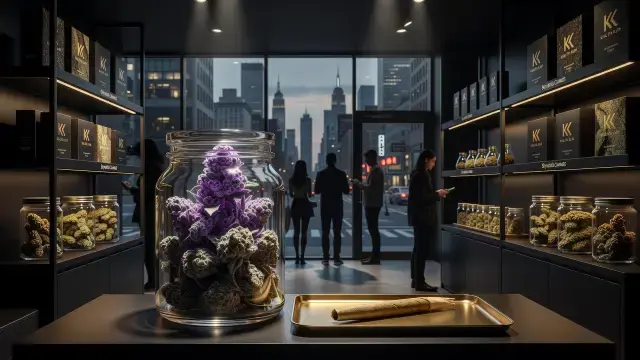
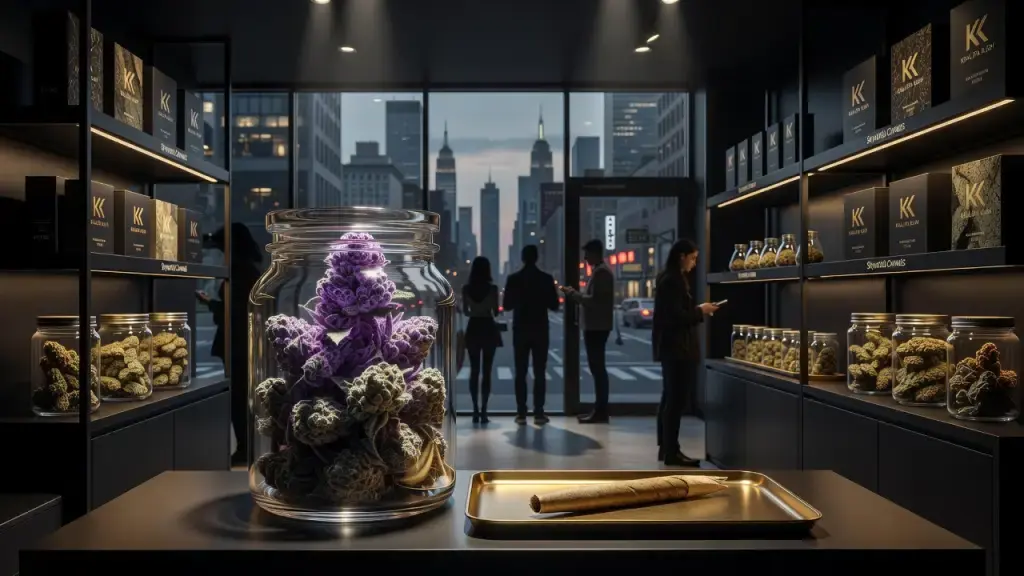
Khalifa Kush, the flower and preroll brand built around rapper Wiz Khalifa's personal cannabis strains, is launching across New York state on Oct. 31, landing on shelves at 36 dispensaries including seven in New York City. The California brand, now 15 years old, is entering through a distribution partnership with New York-based cultivator and distributor Skyworld Cannabis rather than opening its own stores - a structure that tells you something about how celebrity cannabis brands actually scale across state lines.
Why a California Brand Needs a Local Partner
Cannabis can't cross state borders. Federal prohibition still blocks interstate commerce in the plant, so a brand built in California has no way to ship its own product into New York - it has to license its genetics, branding, and standard operating procedures to an in-state cultivator who grows, processes, and packages under New York's regulatory umbrella. That's exactly the arrangement here: Skyworld Cannabis handles cultivation and distribution, while Khalifa Kush supplies the strain genetics and brand identity. For multi-state operators and brand owners watching this deal, it's a reminder that "expansion" in cannabis almost always means replication through local partnership, not direct shipment. Each state becomes its own supply chain, its own METRC tracking system, its own compliance file.
What Dispensaries Are Betting On
New York's adult-use market has no shortage of flower brands competing for limited shelf space, and wholesale buyers are notoriously selective about what earns a place on a crowded menu. DJ Saul, CEO of Khalifa Kush, says the brand has fielded years of customer requests from New York specifically, which is the kind of demand signal retailers look for before committing budroom inventory and marketing support to a new SKU. The initial rollout centers on two strains, KK and Violet Sky, a narrow catalog that lets dispensaries test consumer response before expanding orders. For store buyers, a tight launch assortment also simplifies compliance logging and lab testing requirements tied to new product intake - fewer batches to validate against certificates of analysis before they hit the sales floor.
The Celebrity Brand Risk Dispensary Buyers Weigh
Cannabis retail has seen plenty of celebrity-attached products that amount to little more than a licensing fee and a face on the package. Saul pushed back on that comparison directly, framing Khalifa Kush as a brand built around a strain the artist actually uses rather than a one-off endorsement deal. Whether that distinction matters to the end consumer is a fair question, but it matters quite a bit to wholesale buyers deciding shelf placement - brand consistency and product quality control tend to predict reorder rates better than celebrity attachment alone. In a market where inventory shrinkage, wholesale pricing pressure, and thin margins under 280E already squeeze operators, a flower brand that can't maintain batch-to-batch consistency doesn't last long regardless of whose name is on the label.
Context for Consumers and Regulators
As with any product entering New York's regulated market, Khalifa Kush flower and prerolls will move through the state's required lab testing and compliant packaging protocols before reaching store shelves, and purchases remain restricted to adults of legal age at licensed dispensaries. The brand's expansion also reflects the broader reality of New York's adult-use rollout: a market still building out licensed retail capacity, where new product entries compete less on novelty and more on whether they can hold a consistent spot on an already packed wholesale menu.