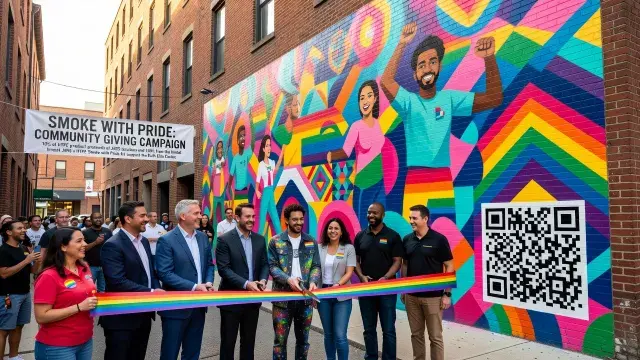
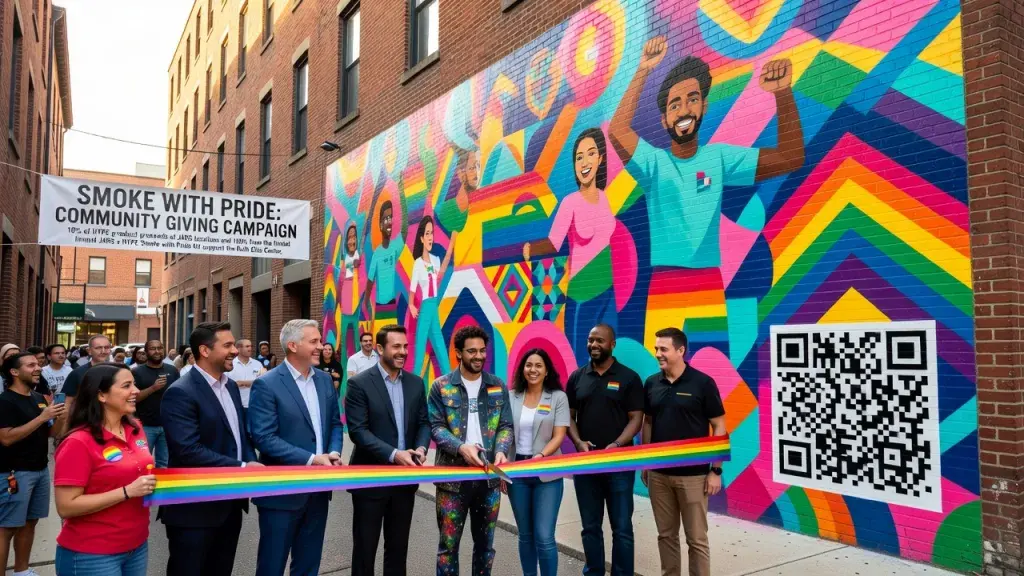
Two Michigan cannabis retailers cut the ribbon on a new mural in downtown Ferndale this week, and the project says as much about how licensed operators are approaching brand identity and community relations as it does about the artwork itself. "Polychromatic Super You," a 40-by-25-foot piece by Michigan artist Joey Salamon, now covers a wall in the alley at 258 W. Nine Mile Rd. The mural was commissioned by JARS Cannabis and HYPE Cannabis to support their joint Smoke with Pride campaign, which benefits Detroit's Ruth Ellis Center, a resource and safe-space organization for at-risk LGBTQ+ youth.
Public murals commissioned by dispensaries are not a new tactic, but they sit at an interesting intersection of marketing, zoning, and community goodwill that operators in regulated markets have to manage carefully. Cannabis advertising rules generally restrict overt promotional messaging in public-facing spaces, which is part of why campaigns like this one lean on cause marketing and philanthropic tie-ins rather than product imagery or pricing. That distinction matters for compliance teams: a mural celebrating Pride and funneling donations to a nonprofit reads very differently, from a regulatory standpoint, than a billboard advertising discounted flower. Retailers building this kind of public-facing presence also need back-end systems that can track promotional spend and donation-linked sales cleanly, which is where infrastructure like Metrc-compliant POS for Vermont becomes relevant for multi-market operators trying to keep reporting consistent across state lines. Metrc-compliant POS for Vermont
How the Donation Structure Works
The mechanics of Smoke with Pride are worth unpacking for anyone watching how cannabis retailers structure charitable partnerships. Ten percent of proceeds from HYPE products sold at JARS locations go to the Ruth Ellis Center, while the JARS x HYPE Smoke with Pride Kit sends 100 percent of its proceeds to the nonprofit. That tiered structure - a partial cut on general product sales, a full donation on a designated kit - is a common approach in cannabis philanthropy because it lets a brand support a cause without restructuring its entire wholesale pricing model. For accounting and 280E purposes, this kind of donation carve-out requires clean SKU-level tracking so that charitable contributions can be documented separately from standard revenue, which matters when tax season and compliance audits come around.
Public Art as Compliance-Friendly Marketing
What's striking here is the QR code embedded directly into the mural. Scan it, and visitors land on information about the Smoke with Pride initiative, resources for LGBTQ+ youth, and a direct donation link to the Ruth Ellis Center. That's a low-friction way to convert foot traffic into charitable engagement without putting a dispensary's name or product on the wall in a way that could run afoul of local advertising ordinances. Ferndale's downtown corridor has embraced public art as a placemaking strategy for years, and cannabis retailers tapping into that existing civic appetite is, in practice, a smarter play than a standalone storefront campaign would be.
What This Signals for Other Operators
For dispensary owners and marketing directors elsewhere, the takeaway isn't "commission a mural." It's that community investment tied to a documented cause, paired with transparent proceeds reporting, tends to generate goodwill that survives scrutiny in ways a straightforward promotional push does not. JARS Marketing Director Stefanie Michels framed the project as an effort to connect cannabis's counterculture roots to LGBTQ+ history, which is a narrative choice as much as a compliance one. Artist Joey Salamon, who identifies as queer, noted that the companies gave him full creative control over the design - a detail that speaks to how brands are learning that authenticity in these partnerships carries more weight than tightly scripted messaging. None of this changes the underlying compliance obligations retailers face around advertising, packaging, and age-gated sales, but it does show how public-facing generosity can be built without stepping outside those lines.