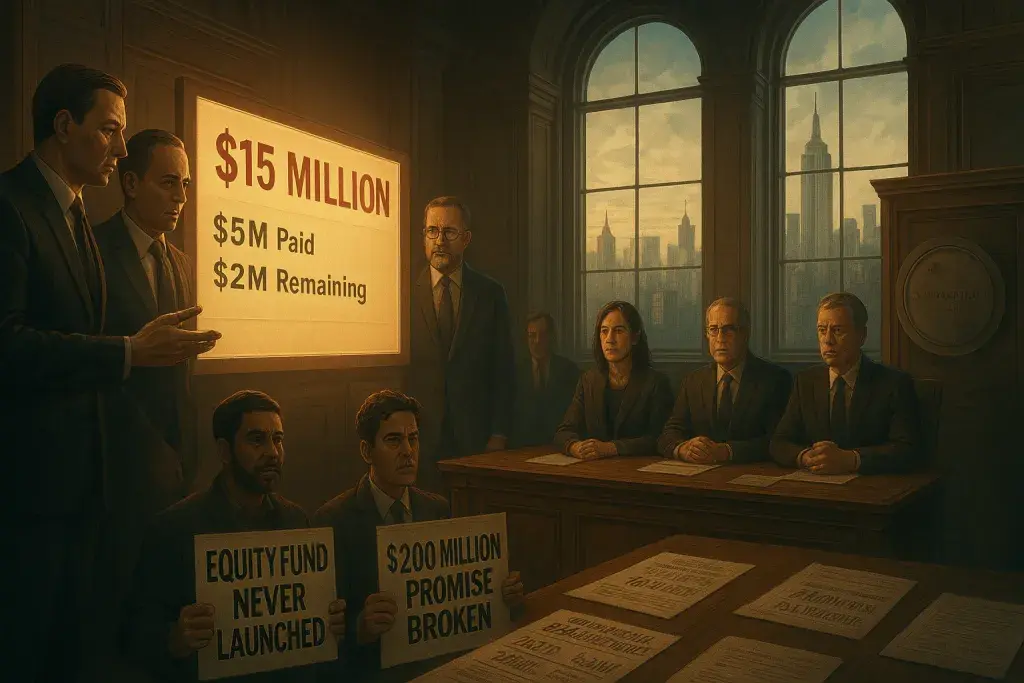
Four of New York's remaining vertically integrated medical cannabis operators are serving adult-use customers while locked in a quiet standoff with state regulators over a $15 million conversion fee they say they cannot pay in full. The dispute sits at the intersection of a collapsing medical market, an unfulfilled promise to equity entrepreneurs, and a legal battle over whether the fee was constitutional in the first place - and it's straining the credibility of the state's entire licensed cannabis framework.
A Fee Built for a Market That No Longer Exists
When New York legislators wrote the conversion fee into law, cannabis company valuations were historically elevated and the industry's financial trajectory looked sharply upward. The fee - initially set at $20 million before being cut to $15 million in last year's state budget - was structured in milestone-based installments tied to licensing status and cumulative adult-use sales thresholds. In theory, a well-capitalized multistate operator scaling a dual-use retail operation could absorb those payments as revenues grew.
In practice, though, the medical market has deteriorated far faster than anyone anticipated. Medical cannabis sales across New York fell from $162.1 million in 2023 to $139.1 million in 2024, and through November 2025 they stood at just $95.5 million - a program in freefall. Only 28 operational medical dispensaries remain in the state, compared to 667 adult-use stores. The per-store sales average for medical dispensaries runs 18% below that of adult-use locations. This is not a market that can organically subsidize a nine-figure conversion obligation.
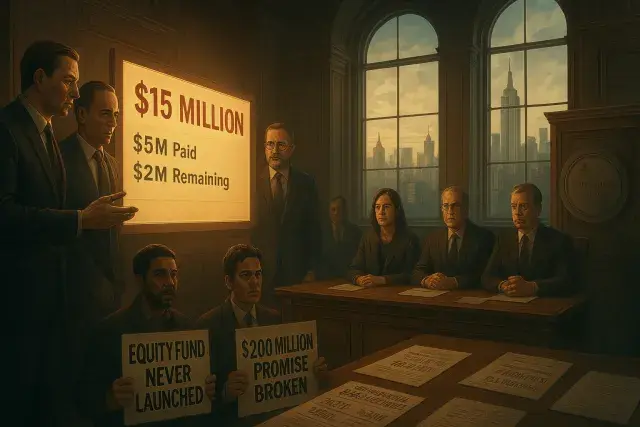
What's striking here is the fee structure itself. The final two installments - $4 million each - don't trigger until a registered organization records $100 million and then $200 million in adult-use sales. For operators whose medical business is shrinking and whose adult-use ramp-up is slower than projected, those thresholds look increasingly remote. Curaleaf, Green Thumb Industries, PharmaCann, and Fluent have each paid $5 million and are reportedly in discussions with state regulators over a remaining $2 million balance, according to a source familiar with the matter. Meanwhile, three other registered organizations have elected to shutter New York operations rather than engage the fee at all.
Small Operators Are Watching - and Not Quietly
The fee was never just a barrier-to-entry mechanism. Under the original framework, conversion fee revenue was earmarked for a $200 million fund designed to provide startup capital to small, social equity cannabis operators - precisely the entrepreneurs New York promised to center in its adult-use rollout. That fund never materialized. And therein lies the equity problem with offering the MSOs relief now.
"Most of us were left to fight for the same expensive real estate as the MSOs, but with none of the state funding we were promised," said Osbert Orduña, founder and CEO of The Cannabis Place, a licensed retailer in Queens. The frustration is direct and well-founded. Small operators entered a market without the vertical integration advantages - combined cultivation, processing, and retail under one license - that registered organizations already held. They competed for the same high-cost urban real estate with thinner capitalization and no government backstop.
Damien Cornwell, president of the Cannabis Association of New York, which represents small operators, put it plainly: the fee's design was intentional. "By design, these fees were specifically earmarked to support equity entrepreneurs, strengthen the supply chain, and sustain our entire ecosystem," Cornwell said. "New York can't afford to keep shifting the goalposts while leaving smaller operators holding the bag." Reducing or eliminating the fee without delivering equivalent relief to small licensees would be, at minimum, a policy contradiction - and likely a source of further litigation.
Regulatory Silence, Legal Challenges, and Market Consequences
The New York Medical Cannabis Industry Association filed suit in December 2024 challenging the original $20 million fee as unconstitutional. A lower court dismissed the case; an appeal is pending. Neither the Office of Cannabis Management nor the New York Medical Cannabis Association would comment on the record for this story - which itself signals how uncomfortable the state finds the position it's in.
Governor Hochul's most recent budget proposal offered no relief from either the conversion fee or the medical cannabis excise tax. That's not a trivial signal. It suggests that whatever private negotiations are underway between OCM and the registered organizations, the political will for a legislative fix isn't there yet. The state is holding a formal line even as it quietly negotiates on installment balances behind closed doors.
The practical fallout extends beyond the MSOs themselves. Orduña pointed out that the fee revenue was also intended to fund enforcement against unlicensed retailers - a problem that remains acute across New York. "We are told there aren't enough 'resources' to shut down the thousands of illicit shops," he said. "Those resources were supposed to come from the RO fees." Whether or not that revenue would have directly funded enforcement is a policy question worth pressing, but the basic logic holds: the fee's failure to fully collect has real downstream effects on the licensed market's competitive integrity.
What This Means for the Licensed Market Going Forward
For dispensary operators, investors, and compliance professionals tracking New York, the situation raises a few specific concerns worth holding onto.
- The $15 million fee is still the highest conversion barrier in the country. Maryland capped its medical-to-adult-use fee at $2 million. Delaware's fees were in the low six figures. Several states charged nothing. The New York figure was always an outlier - and its feasibility in a down market is now an open question with legal and regulatory dimensions.
- Three registered organizations have already exited or closed dispensaries rather than pay. That consolidation narrows patient access to the medical program at a moment when OCM says it is committed to improving it.
- The equity fund never launched. Any fee reduction that isn't paired with an alternative mechanism to capitalize small operators would effectively retire a core promise of New York's adult-use legislation without replacement.
- The appeal of the constitutional challenge remains live. If the appellate court revisits the fee's legality, the regulatory framework for registered organizations in New York could shift in ways that affect licensing terms, dual-license obligations, and OCM's fee enforcement posture broadly.
Total adult-use cannabis sales in New York exceeded $1.7 billion in 2025 - a number that reflects real market scale, and one that makes the MSOs' argument harder to accept at face value even as their medical operations struggle. The tension here isn't simply financial. It's structural: a fee designed for a different market moment, attached to a promise that was never kept, now sitting at the center of a dispute that touches licensing equity, enforcement funding, patient access, and the state's credibility as a regulated market. New York built an ambitious framework. Holding it together requires decisions that are harder than cutting a check.