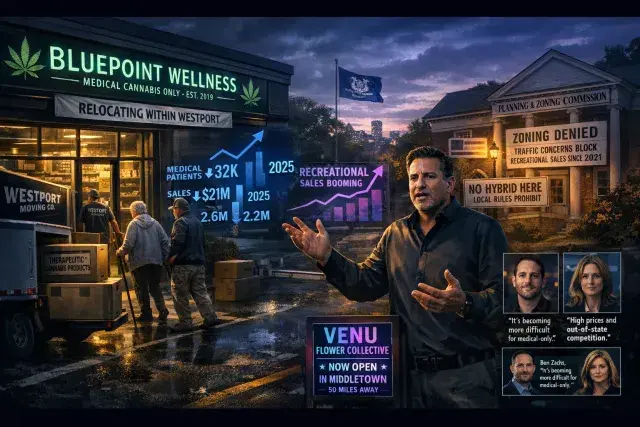

All nine Fine Fettle dispensaries across Connecticut will transition to hybrid facilities on January 15, enabling them to serve both medical patients and adult-use customers. This pivotal shift enhances patient access amid the state's maturing cannabis market, blending recreational growth with robust medical care.
Key Details of the Hybrid Expansion
Fine Fettle's move affects locations in Manchester, Norwalk, Old Saybrook, Waterbury, and West Hartford. Each site will maintain core medical services, including remote and in-person consultations with licensed pharmacists—a hallmark of Connecticut's medical marijuana program.
- Hybrid model allows seamless service to registered medical patients and recreational buyers.
- Preserves personalized care without compromising quality or expertise.
- Addresses regional gaps where medical options have been scarce.
Regulatory Changes Driving the Shift
Recent Connecticut cannabis legislation empowers recreational retailers to convert to hybrids, fostering operational efficiency and broader access. This follows the 2021 adult-use legalization, which has seen the market expand rapidly—Connecticut now boasts over 100 dispensaries statewide, with hybrid models proving essential for sustainability.
These updates stem from legislative efforts to strengthen the medical program, ensuring patients aren't sidelined by recreational dominance. Fine Fettle Chief Operating Officer Benjamin Zachs emphasized: "This change allows us to continue fulfilling our mission of accessible, compassionate care while strengthening the state's medical program."
Implications for Patients, Equity, and Market Evolution
The conversion promises equity in cannabis access, reducing travel burdens for medical patients and integrating them into a unified system. In public health terms, this aligns with trends toward inclusive models that prioritize education, affordability, and safety—key to mitigating risks like overconsumption or misinformation.
Broader societal benefits include economic boosts from streamlined operations and a more mature market. Zachs noted: "Patients shouldn't have to travel far for care or be stuck with limited options. With this model, we can responsibly serve both patients and customers while keeping Connecticut's medical community strong."
Looking ahead, Fine Fettle's leadership positions Connecticut as a model for balanced cannabis policy, potentially influencing neighboring states grappling with similar medical-recreational tensions.