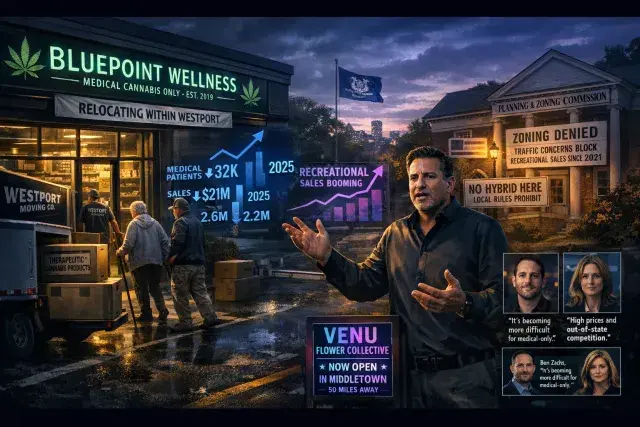
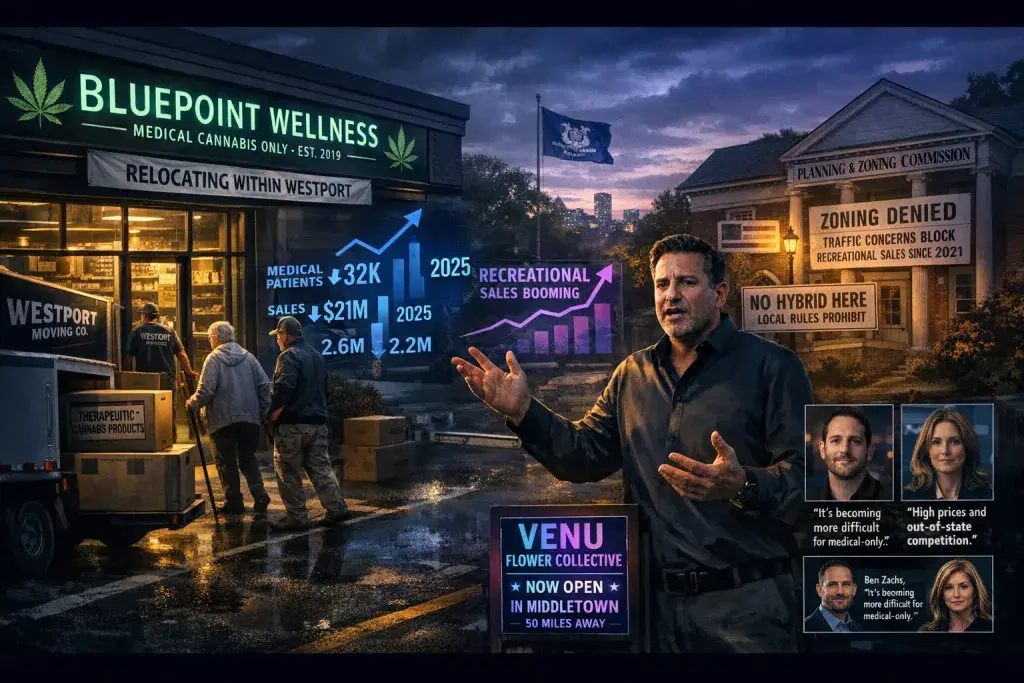
Bluepoint Wellness, Connecticut's sole remaining medical-only cannabis dispensary, is relocating within Westport after repeated zoning denials blocked recreational sales. Opened in 2019, this move underscores a statewide pivot to hybrid operations, potentially leaving no dedicated medical outlets and challenging access for patients reliant on therapeutic cannabis.
Zoning Roadblocks Force Strategic Shift
Westport's Planning and Zoning Commission has consistently rejected Bluepoint's requests to sell recreational products since 2021 legalization, citing traffic concerns. Local rules prohibit such businesses, unlike most of the state's 61 licensed stores—29 of which now operate as hybrids offering both medical and adult-use cannabis.
- Bluepoint co-founder Nick Tamborrino noted in 2023: "Each day, we have to turn away local residents asking if we sell recreational products."
- In response, the company launched Venu Flower Collective, a recreational store 50 miles away in Middletown.
- The Westport relocation buys 18-24 months before shifting to an unnamed town for full hybrid sales, pending zoning updates.
Medical Market Contracts as Recreational Booms
Recreational sales launched in 2023 have eroded Connecticut's medical cannabis sector. Patient numbers plunged from nearly 49,000 to under 32,000, with 2025 medical sales dropping $21 million year-over-year. Transactions fell from 2.6 million in 2024 to 2.2 million in 2025.
Experts like Fine Fettle COO Ben Zachs observe: "It’s becoming more and more difficult for most stores to think medical only." State ombudsman Erin Gorman Kirk points to high prices, inconsistent quality, and limited variety—issues amplified by competition from Massachusetts and Rhode Island's robust recreational markets.
Implications for Patients and Industry Evolution
This transition highlights broader trends in cannabis policy: as recreational markets mature, medical-only models struggle financially, prioritizing volume over specialized care. Medical patients, often seeking relief for chronic conditions, face reduced options amid rising recreational dominance—potentially exacerbating access barriers in rural or restrictive areas.
Yet hybrids promise efficiency, blending patient protections with wider availability. For Connecticut, updating zoning could sustain Bluepoint's legacy while adapting to a $1 billion-plus industry, ensuring therapeutic benefits endure without isolation from consumer shifts.