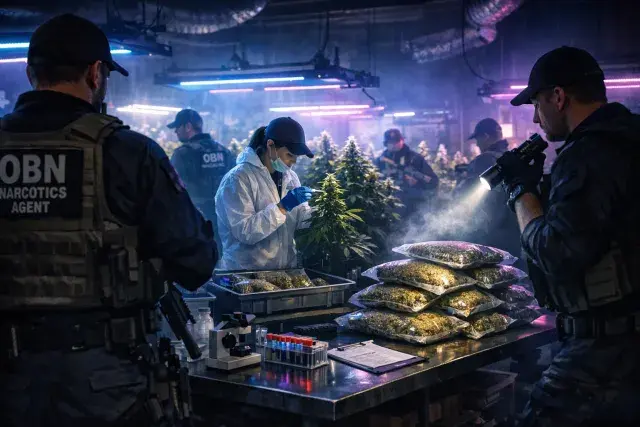
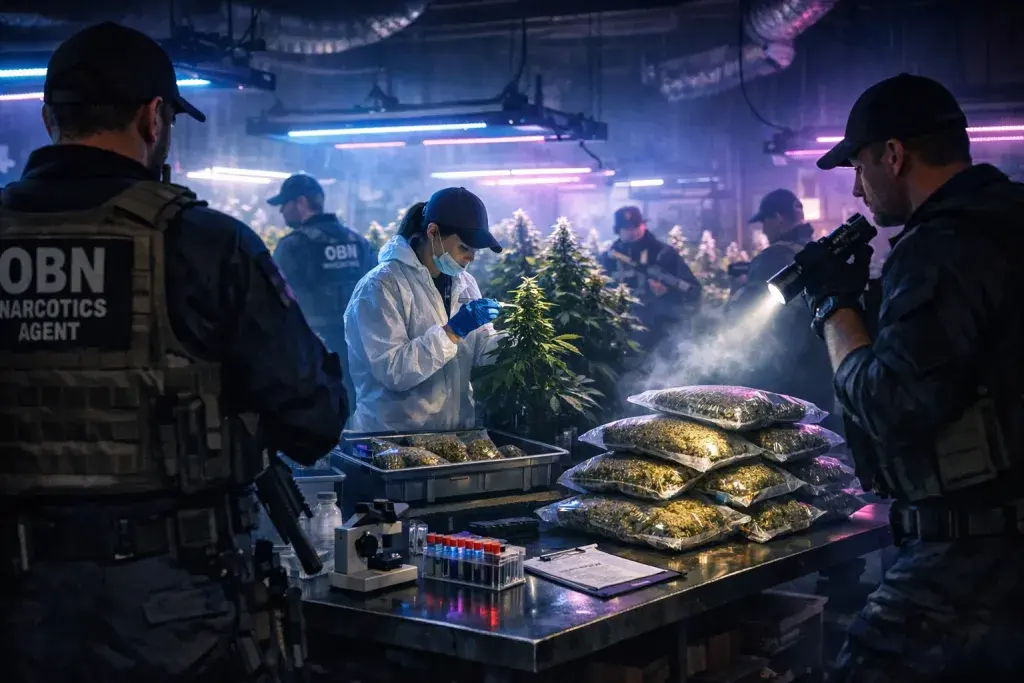
Agents from the Oklahoma Bureau of Narcotics raided a warehouse in Ardmore last Thursday, uncovering more than 5,000 marijuana plants and 195 pounds of processed marijuana. The operation targeted American Green Cross LLC at 2405 Autumn Run, marking a significant enforcement action amid Oklahoma's complex landscape of marijuana regulation. This seizure highlights ongoing tensions between state-sanctioned medical programs and illicit cultivation networks.
Details of the Ardmore Operation
The raid occurred at a nondescript warehouse building, where agents discovered an extensive indoor grow operation. Authorities confiscated the plants, which were likely cultivated for distribution beyond legal channels, along with the processed marijuana ready for sale. Such large-scale discoveries often involve sophisticated setups with lighting, ventilation, and irrigation systems designed to maximize yield in controlled environments. Oklahoma Bureau of Narcotics agents executed the search with precision, reflecting their focus on disrupting black-market activities that evade state oversight.
Oklahoma's Marijuana Framework and Enforcement Challenges
Oklahoma voters approved a medical marijuana program in 2018 through State Question 788, creating one of the nation's most permissive systems with low barriers to entry for patients and businesses. This led to rapid expansion, with thousands of licensed growers and dispensaries statewide. However, the lack of strict vertical integration rules has fostered gray-market operations, where facilities purport to serve medical needs but supply recreational users or out-of-state markets. Illicit grows like the one in Ardmore exploit these gaps, contributing to oversupply and downward pressure on legal prices while fueling underground economies.
Broader Implications for Public Safety and Regulation
Raids such as this one underscore the risks of unregulated marijuana production, including potential contamination from pesticides, mold, or improper handling that medical users avoid through licensed testing. Large seizures disrupt supply chains tied to organized crime, which can fund other illicit activities. As states grapple with legalization, Oklahoma's experience reveals the delicate balance between access and control: lax rules spur innovation and tax revenue but invite abuse. Future policy adjustments may tighten licensing and tracking to curb such operations without stifling legitimate growth.