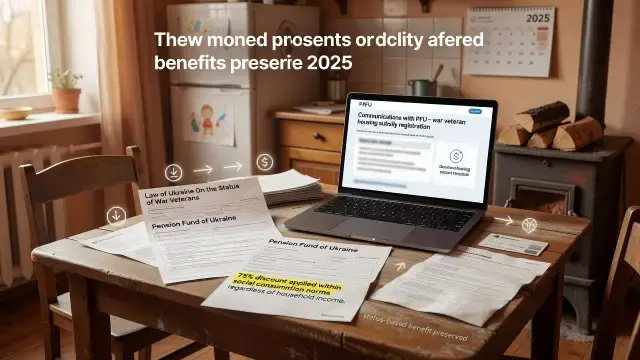
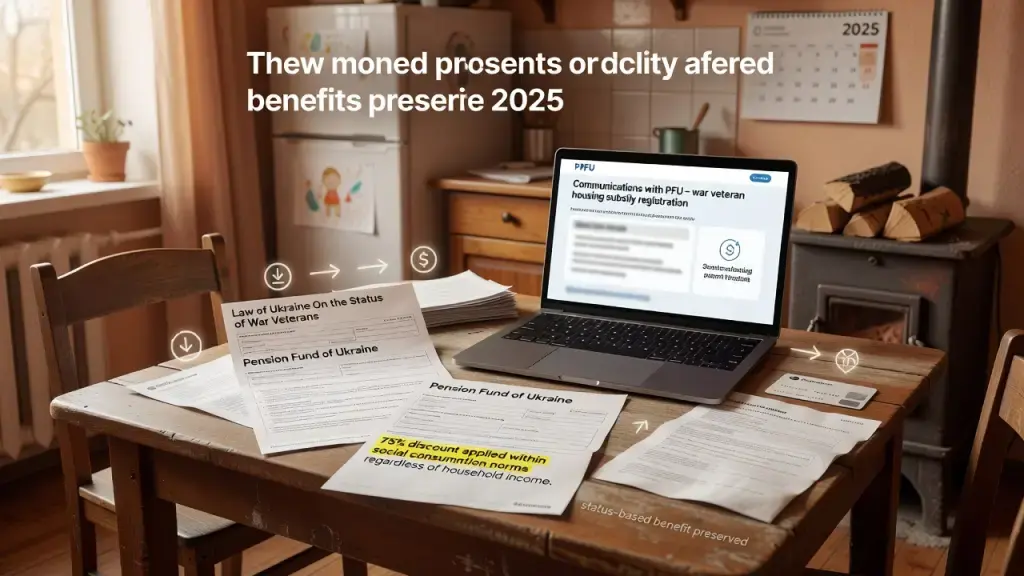
Combatants in Ukraine retain the right to a 75% discount on housing and communal services no matter how much their household earns, even as the government tightens income-based eligibility rules for other categories of subsidy recipients in 2025. The carve-out matters because it preserves a flat, status-based benefit at a moment when most utility assistance programs are shifting toward means-tested models.
What the Benefit Actually Covers
The discount, set out in the Law of Ukraine "On the Status of War Veterans, Guarantees of Their Social Protection," applies to apartment fees, core communal services such as gas, heating, electricity, and garbage removal, and fuel for households without central heating. It extends past the individual beneficiary to a defined circle of family members living with them: a spouse, minor children, unmarried adult children with a qualifying disability, incapacitated parents, and anyone under the beneficiary's guardianship or care.
Here's the catch that trips people up: the discount only applies within established social consumption norms. Usage above those norms is billed at the full rate, so a household running heavier-than-average consumption won't see the full 75% reduction reflected on its total bill.
Why the Income Exemption Stands Apart
Starting in 2025, authorities introduced average monthly household income as a qualifying condition for certain categories of housing and utility assistance. That's a meaningful structural shift - it moves parts of the system closer to a conventional means-tested subsidy model. Combatants, however, were excluded from that change. Their eligibility remains tied to status, not earnings, which keeps the benefit administratively simpler for this group even as other applicants now have to document household income to qualify.
How the Application and Payment Process Works
Applications can be filed two ways: online through the Pension Fund of Ukraine portal, or in person at any Pension Fund service center. The portal route runs through the "Communications with PFU" section, where applicants select the housing subsidy application, then the specific option for war veteran registration under the current experimental project. The online form requires supporting documents uploaded as scanned files, consent to personal data processing, and an electronic signature before submission. Applicants can track status afterward in the "My appeals" section.
The benefit is paid in monetary form, not as a direct bill reduction. The Pension Fund typically opens an account at Oschadbank by default, though recipients can request payment to an account at another bank by filing a separate application with supporting account details. In practice, though, the mechanism requires the beneficiary to pay the full utility bill first and receive compensation afterward - a sequencing detail that matters for household cash flow, particularly for lower-income families who still have to front the full payment before reimbursement arrives.
One operational risk worth flagging: non-payment of housing and communal services can serve as grounds for terminating the benefit. The exemption also extends to rented housing, provided the rental is formalized under an official lease agreement submitted with the application.
- 75% discount applies regardless of family income, unlike most 2025 utility subsidy categories
- Covers apartment fees, communal services, and heating fuel for homes without central heating
- Extends to spouse, minor children, qualifying adult children, incapacitated parents, and wards
- Applies within social consumption norms only; excess usage is paid at full rate
- Available for both owned and officially rented housing with a signed lease
- Paid as monetary compensation after the beneficiary covers the full bill