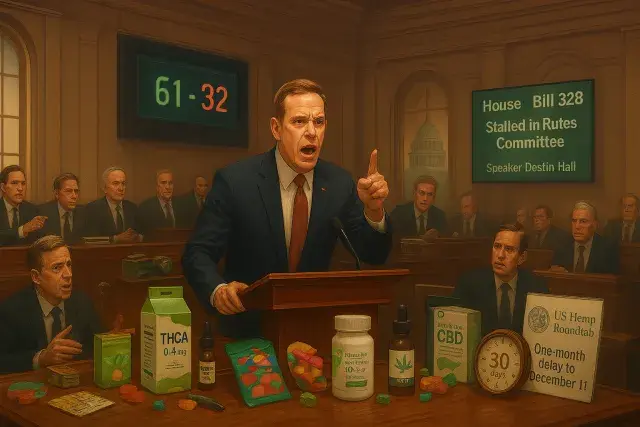
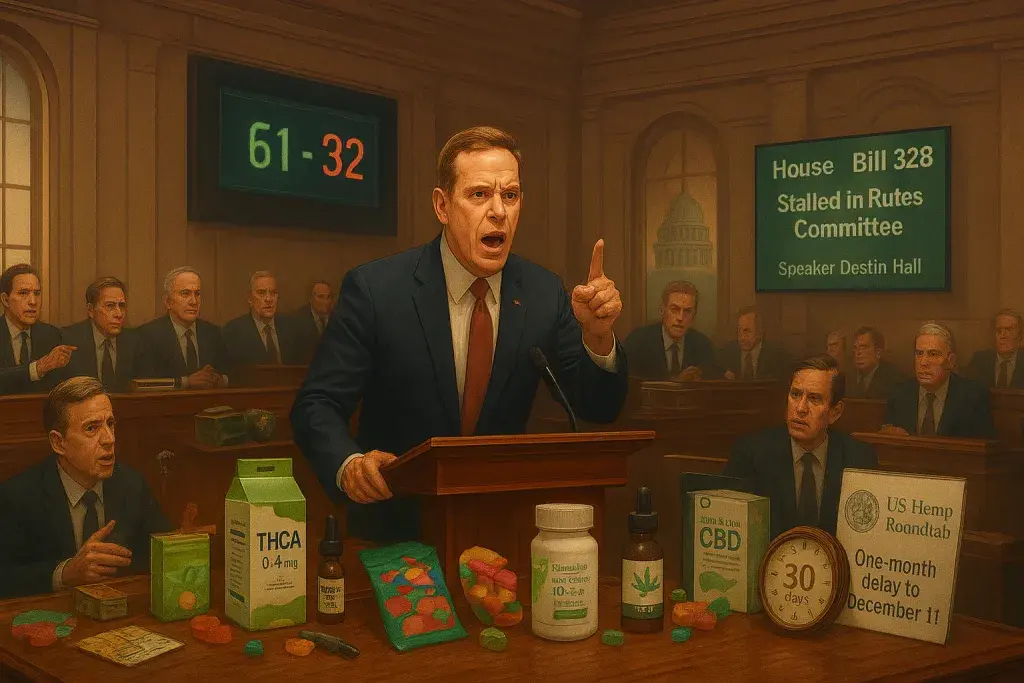
A one-month delay in enforcing federal limits on intoxicating hemp products will stand, after the Senate voted 61-32 on Aug. 8 to table an amendment from Sen. Ted Budd, R-NC, that would have kept the Nov. 12 effective date intact. The vote preserves Section 2019 of the continuing resolution, which pushes application of the new hemp THC standard to Dec. 11 instead. For an industry that has spent the past year bracing for a hard compliance deadline, the extra 30 days matters - though it settles nothing about what comes after.
The underlying law, passed in November 2025, redefines hemp based on total THC content and bars finished hemp-derived products containing more than 0.4 milligrams of combined THC and similar cannabinoids per container. That threshold would functionally eliminate most THC beverages, gummies, vapes, and THCA flower currently sold outside licensed dispensaries, in gas stations, convenience stores, and grocery aisles. For operators running compliant, state-licensed cannabis retail - the kind tracking every batch through seed-to-sale software and processing sales on a dispensary pos system Pennsylvania operators already use to log age verification and COA data - the fight in Washington is really about whether unregulated hemp retailers will keep competing on the same shelf space without the same testing, packaging, or age-gating obligations. dispensary pos system Pennsylvania
Budd framed his amendment around child safety, citing North Carolina emergency department data showing a steep rise in cannabis-related visits among minors and pointing to hemp packaging that mimics popular snack and candy brands. Opponents, including a coalition of 105 organizations ranging from the US Hemp Roundtable to the National Association of Convenience Stores, argued the extra month gives Congress room to build actual regulation - good manufacturing practices, import controls on synthetic cannabinoids, age restrictions - rather than a blunt ban that wipes out a large swath of the market overnight.
Why the Delay Divides an Industry
Here's the catch: nobody on either side of this vote is defending the unregulated status quo outright. The disagreement is over mechanism. A hard THC cutoff enforced on schedule removes ambiguity fast, but it also removes product categories that some hemp retailers have built entire wholesale menus around. A delay buys time for a regulatory framework - but frameworks take longer to write than 30 days, and there's no guarantee Congress uses the window productively. CMS Administrator Dr. Mehmet Oz weighed in from a different angle, warning that a hard Nov. 12 cutoff could disrupt access to full-spectrum CBD products for seniors and people with disabilities, a claim Budd publicly disputed.
North Carolina's Parallel Standoff
The federal fight is shadowed by an almost identical stalemate in Raleigh. House Bill 328 would write the same 0.4-milligram threshold directly into North Carolina law, independent of whatever Congress ultimately decides. The Senate approved the conference report 37-6 back on July 2, but the House has repeatedly declined to vote, leaving it parked in the Rules Committee. Speaker Destin Hall says lawmakers broadly agree the state's largely unregulated hemp market can't continue as-is, but disagree sharply on the fix - a familiar tension for any operator watching two governments try to regulate the same substance on different clocks.
What Operators Should Watch Next
- Whether Congress uses the Dec. 11 window to pass actual market rules, or simply lets the Nov. 12 standard take effect by default
- How state legislatures like North Carolina's respond if federal restrictions are delayed again or rewritten
- Whether licensed, compliant retailers gain a competitive edge as unregulated hemp products face tighter enforcement
- How wholesale suppliers and brands adjust SKU lineups ahead of any hard THC-per-container limit
For licensed cannabis retailers already operating under state excise tax rules, lab testing mandates, and 280E tax exposure, the hemp fight underscores a basic asymmetry: compliant operators absorb regulatory cost that unregulated hemp sellers have largely avoided. Whether that gap closes in December, next year, or not at all remains, for now, an open question in two capitols at once.