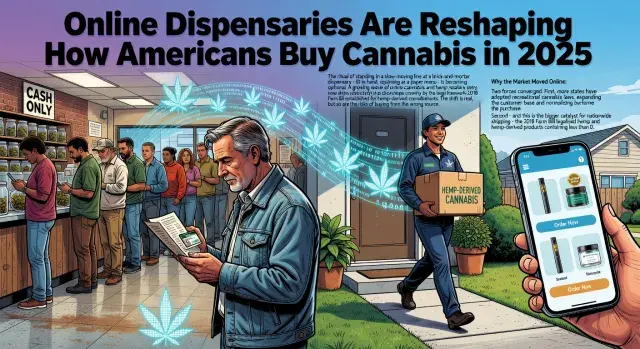
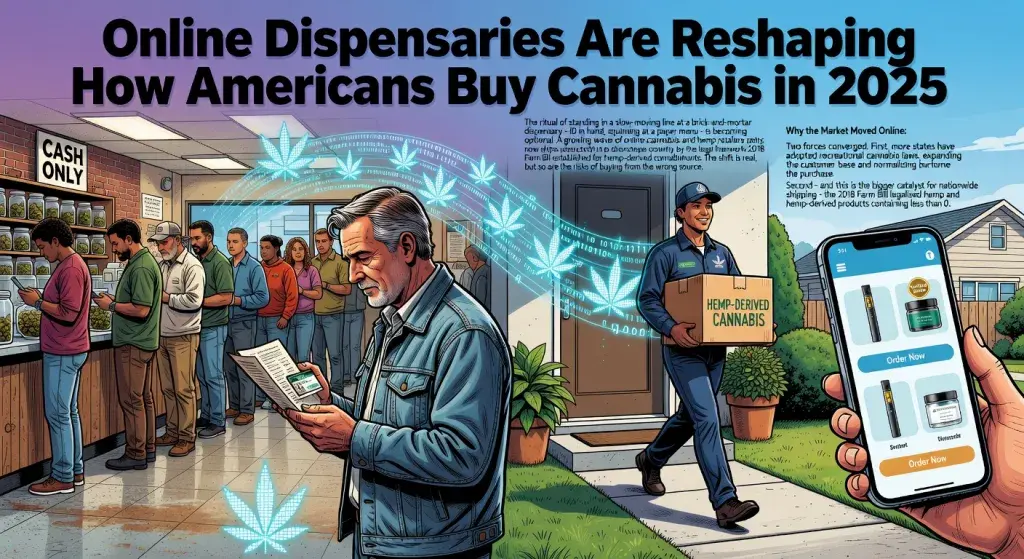
The ritual of standing in a slow-moving line at a brick-and-mortar dispensary - ID in hand, squinting at a paper menu - is becoming optional. A growing wave of online cannabis and hemp retailers now ships products directly to doorsteps across the country, powered largely by the legal framework the 2018 Farm Bill established for hemp-derived cannabinoids. The shift is real, but so are the risks of buying from the wrong source.
Why the Market Moved Online
Two forces converged. First, more states have adopted recreational cannabis laws, expanding the customer base and normalizing the purchase. Second - and this is the bigger catalyst for nationwide shipping - the 2018 Farm Bill legalized hemp and hemp-derived products containing less than 0.3% delta 9 THC by dry weight. That single threshold opened a door for compounds like delta 8 THC, THCA, CBD, and various other cannabinoids to be sold legally across state lines.
The result? A sprawling e-commerce sector that looks, structurally, a lot like the supplement industry - with all the promise and all the buyer-beware caveats that comparison implies. Companies like Area 52, Royal CBD, Finest Labs, and GoldBee have built direct-to-consumer brands around hemp-derived products, competing on extraction quality, ingredient transparency, and third-party lab verification.
What Separates the Best from the Rest
Not all online dispensaries are built the same. The reputable ones share a few non-negotiable traits:
- Third-party lab testing with publicly available certificates of analysis (COAs) confirming cannabinoid potency and the absence of pesticides, heavy metals, and residual solvents.
- Clean extraction methods - CO2 extraction and hydrodistillation are considered gold standards because they avoid harsh chemical solvents.
- Source transparency - knowing where the hemp was grown, and under what conditions, matters enormously. Hemp is a bioaccumulator; it pulls contaminants from soil with disturbing efficiency.
- Clear labeling of cannabinoid content per serving, not just per package.
Among the top-tier brands, Area 52 has carved out a niche with high-potency delta 8 and delta 9 gummies, THCA vape pens, and even Amanita muscaria mushroom products - a category that sits outside traditional cannabinoid regulation entirely. Royal CBD leans harder into full-spectrum CBD formulations and the entourage effect, the hypothesis that cannabinoids work more effectively in concert than in isolation. Finest Labs, meanwhile, distinguishes itself through an unusual emphasis on terpene profiles, the aromatic compounds that influence both flavor and subjective effect. GoldBee keeps it focused: small-batch, organic, CBD-centric.
Here's the catch, though. "Premium" and "organic" are easy words to print on a label. Without verified COAs, they're just marketing copy.
The Regulatory Grey Zone
Federal legality under the Farm Bill doesn't mean uniform legality everywhere. Individual states retain authority to restrict or ban specific hemp-derived cannabinoids. Delta 8 THC, for instance, has been explicitly prohibited or restricted in more than a dozen states despite its federal status. THCA occupies an even murkier space - it's non-intoxicating in its raw form but converts to delta 9 THC when heated, which is precisely what happens when you vape it.
Consumers bear the burden of knowing their state's rules. Reputable online dispensaries will flag shipping restrictions, but not all of them do. And the FDA has yet to establish a comprehensive regulatory framework for hemp-derived cannabinoids beyond CBD in approved pharmaceuticals, which means quality control remains largely voluntary and industry-driven.
What This Means for Buyers
Convenience is genuine. So is the risk of wasted money - or worse - on poorly made products. The online dispensary model works best for informed consumers: people who read lab reports, understand the difference between full-spectrum and isolate, and recognize that a 15 mg delta 9 gummy is a very different experience from a 25 mg CBD gummy.
If you're new to this space, start low-potency and stick to brands that make their testing data easy to find. Not buried three clicks deep. Not "available upon request." Easy. Visible. That transparency - or its absence - tells you nearly everything you need to know about the company behind the product.