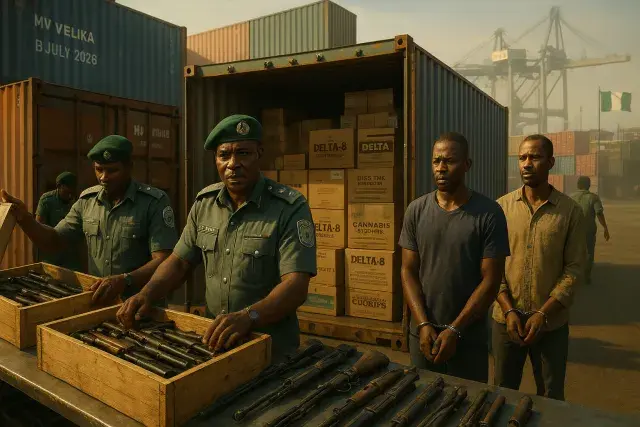
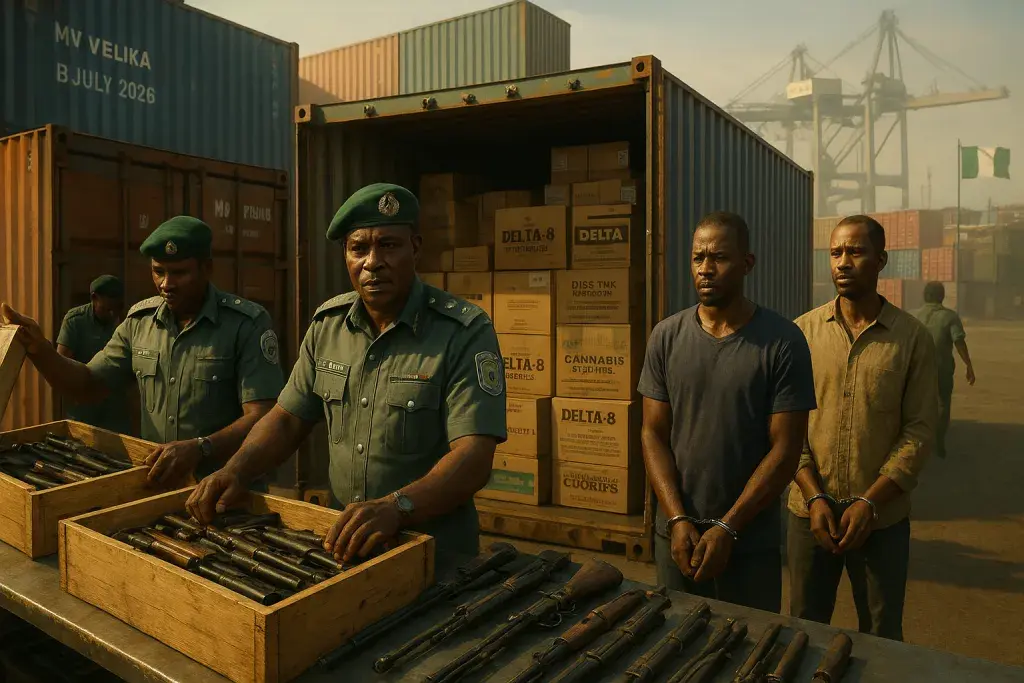
The Nigeria Customs Service has intercepted a shipping container concealing components for more than 140 pump-action rifles, alongside a separate seizure of cannabis-infused products valued above ₦373.8 million, at the Tincan Island Port Command in Lagos. Comptroller General of Customs Adewale Adeniyi disclosed the findings on Thursday, 6 August 2026, describing them as evidence of transnational criminal networks probing legitimate trade channels ahead of Nigeria's next general election cycle.
The rifle container, which arrived aboard MV VELIKA on 8 July 2026, was flagged through the Service's intelligence-driven risk management system before officers uncovered knocked-down parts preliminarily identified as JoJeff pump-action rifles hidden inside crates. Two suspects have been arrested; a third remains at large. In a market where illicit goods routinely move alongside legal cargo, the case is a reminder that traceability tools matter well beyond weapons enforcement - the same logic drives why licensed cannabis retailers elsewhere increasingly rely on systems like cannabis POS and inventory software to keep batch-level records auditable from import or cultivation through final sale, closing the kind of documentation gaps smugglers depend on. cannabis POS and inventory software
The second operation involved two 40-foot containers carrying cannabis-infused cookies, gummies and pre-roll products concealed among used vehicles, generators, batteries and other imported goods. Customs recorded 109 cartons of Delta-8 cannabis-infused pre-roll cookies, 125 cartons of Delta-8 gummies and 73 cartons of cannabis-infused cookies, with a combined street value put at ₦373,802,640. Nigeria does not operate a regulated adult-use cannabis market, so these products entered through channels with no lab testing, no certificate of analysis, and no verified labeling - the basic safeguards that licensed jurisdictions require before infused edibles reach a shelf.
Why Concealment Tactics Signal Bigger Supply Chain Risk
Hiding contraband among used vehicles, generators and batteries is not new, but it does show how smugglers exploit high-volume, low-scrutiny cargo categories. For customs authorities and legitimate importers alike, this raises the cost of doing business: more manifests get flagged, more containers face physical examination, and clearance times stretch for everyone shipping through the same port corridors. Adeniyi credited the intercepts to risk profiling and inter-agency collaboration, which is precisely the kind of enforcement infrastructure that regulated cannabis markets abroad use to separate compliant supply chains from diverted or unregulated product.
What It Means for Compliance and Enforcement Going Forward
The CGC's warning about election-season smuggling attempts is not incidental. Ports and borders tend to see spikes in illicit trafficking around periods of political tension, and customs agencies typically respond by tightening inspection thresholds and intelligence sharing. For any business moving goods through Tincan Island or comparable commands, the practical takeaway is straightforward: documentation integrity, accurate cargo declarations and internal controls against employee complicity now carry higher stakes. Adeniyi was direct on that last point, stating the Service "will not harbour any of these people who want to serve as accomplices." That applies as much to freight forwarders and clearing agents as to customs personnel themselves.