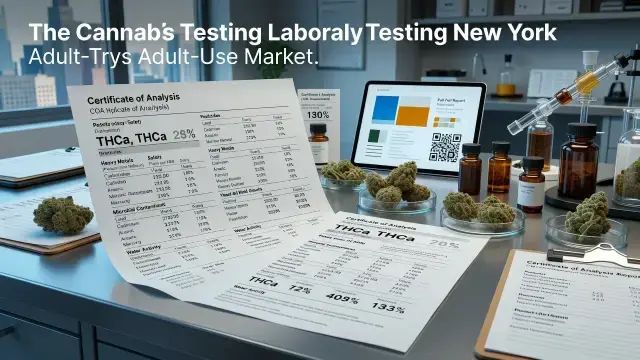
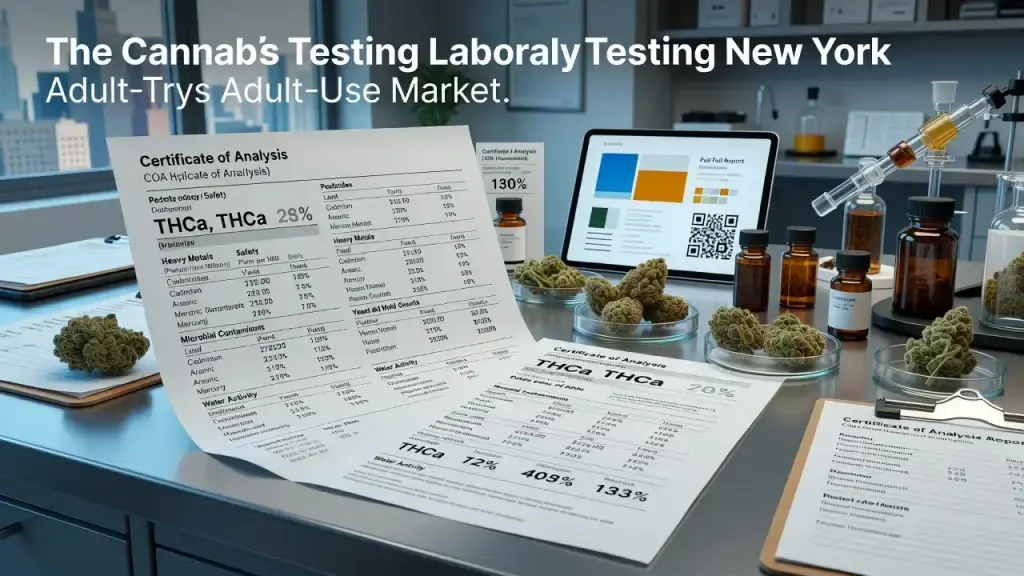
A certificate of analysis has one page everyone photographs and several pages almost nobody reads. The cannabinoid results sit up front - the THC and THCa percentages that drive shelf talk and wholesale pricing. Behind them sit the safety panels: pesticides, heavy metals, microbial contaminants. In New York's adult-use market, a batch that fails any one of those panels does not reach a dispensary counter, full stop. For operators and compliance staff, that back half of the COA is the part that actually carries legal weight.
What the Panels Are Actually Checking
The pesticide panel screens for residues from agricultural chemicals against state action limits, regardless of what a cultivator says it did or didn't spray. Verification, not trust - that's the whole premise of third-party lab testing. The heavy metals panel typically covers four familiar names: lead, cadmium, arsenic and mercury, reported in parts per million or billion rather than the percentage scale used for cannabinoids. That unit shift trips people up more than it should; a compliance manager reading a COA for internal QA has to know which column uses which scale before a number means anything.
The microbial panel looks for bacteria and mold species the state treats as disqualifying, and many labs report yeast and mold counts plus water activity alongside it. Water activity is the quiet one - it measures how much moisture in a product remains available to support microbial growth, which is a shelf-stability question as much as a safety one. None of this is exotic science. It's the same testing discipline that stands behind packaged food, run through cannabis-specific thresholds.
Why Concentrates Raise the Stakes
For a concentrate product, the panels matter for a structural reason: extraction concentrates whatever was present in the starting material. If a cultivation batch carried trace pesticide residue near a limit, refining it into a concentrate can push that residue well past the threshold. That's exactly why the finished product gets tested, not just the flower it came from. For wholesalers and brand partners, this means a clean flower COA upstream doesn't guarantee a clean concentrate COA downstream - each finished batch needs its own panel, tied to its own batch number, with no assumptions carried over from an earlier stage in the supply chain.
The Operational Reality for Retailers
Here's the catch for dispensary operators: a passing safety panel is a floor, not a selling point. It makes a batch eligible for sale. It says nothing about strength, effect or quality, and budtenders who conflate "passed testing" with "better product" are misrepresenting what the document shows. The honest framing is narrower and less exciting - every listed compound, under its limit, on this batch, on this date, and no other claim beyond that.
From a compliance-log standpoint, the operational discipline is straightforward but unforgiving: match the batch number on the package to the batch number on the COA before the product goes on a shelf or into a delivery manifest, every time, with no exceptions for familiar brands or repeat suppliers. Batch identity is the whole system. A lab sheet only reports the sample it received, and a mismatched batch number turns an otherwise clean document into evidence of nothing.
Points worth building into a store's standard operating procedure:
- Verify batch numbers on package, COA and point-of-sale records before intake, not after a customer asks
- Train staff to distinguish potency data from safety data when answering customer questions
- Keep QR-code or website access to full COAs functional at the register, not just in a back-office folder
- Flag any COA using vague pass language without the underlying numerical results for compliance review
Lab testing requirements exist because the alternative - trusting cultivators and processors to self-report - failed often enough in other regulated industries that it stopped being an option. The paperwork is tedious by design. That's not a flaw in the system. It's the point of it.